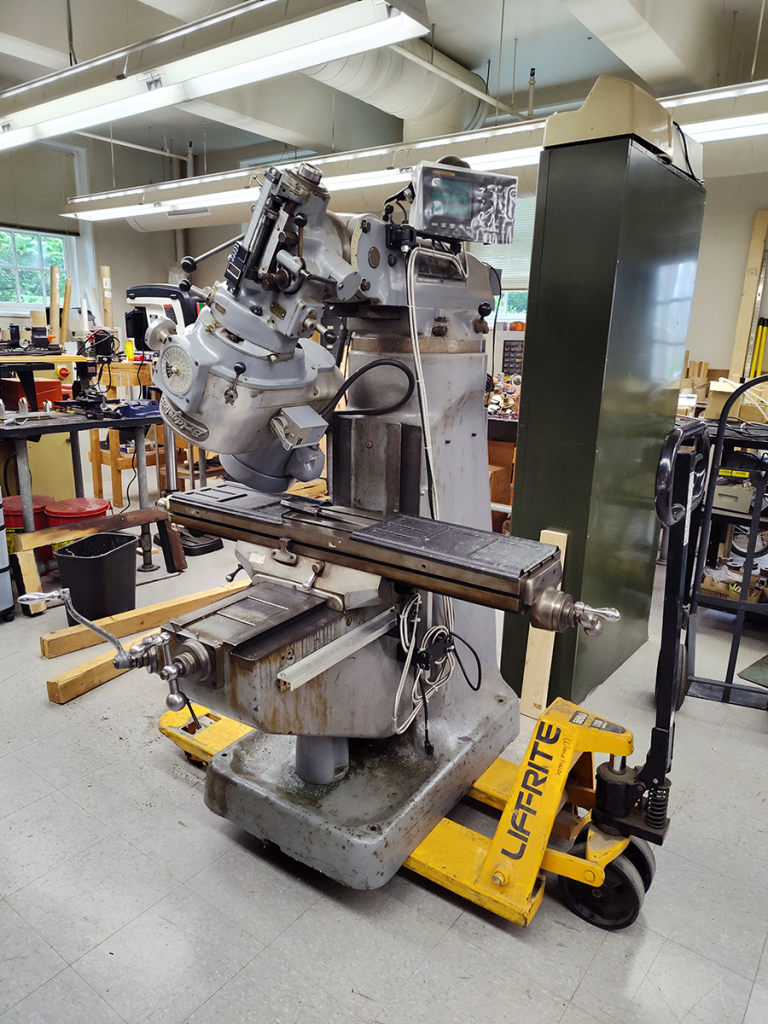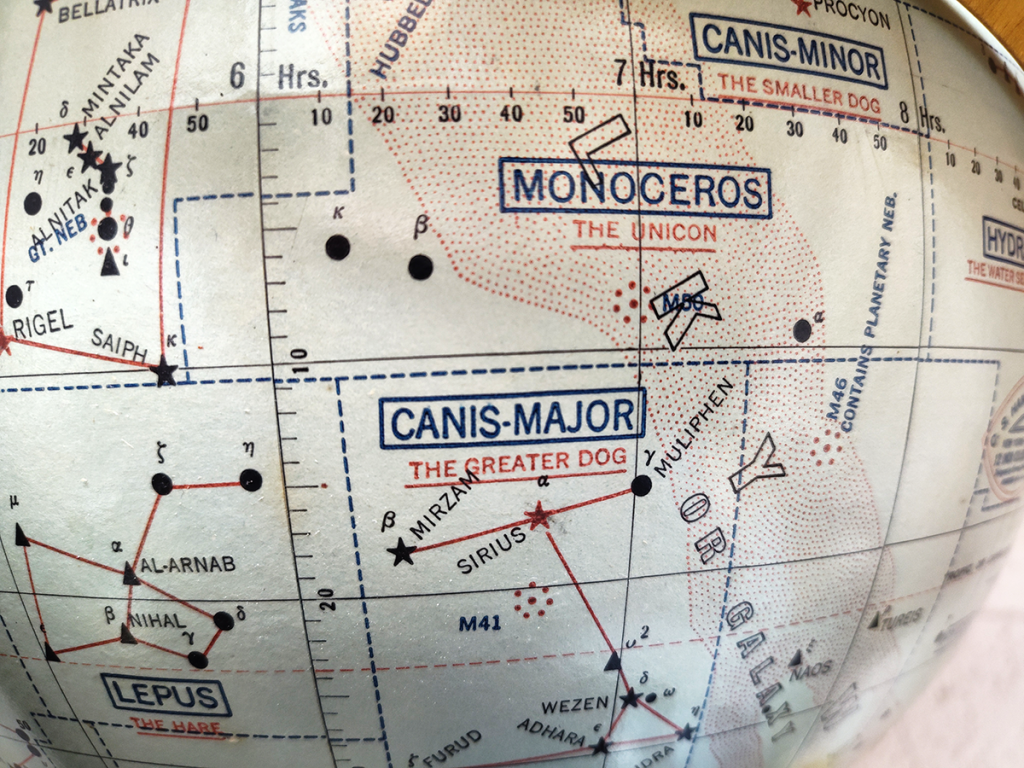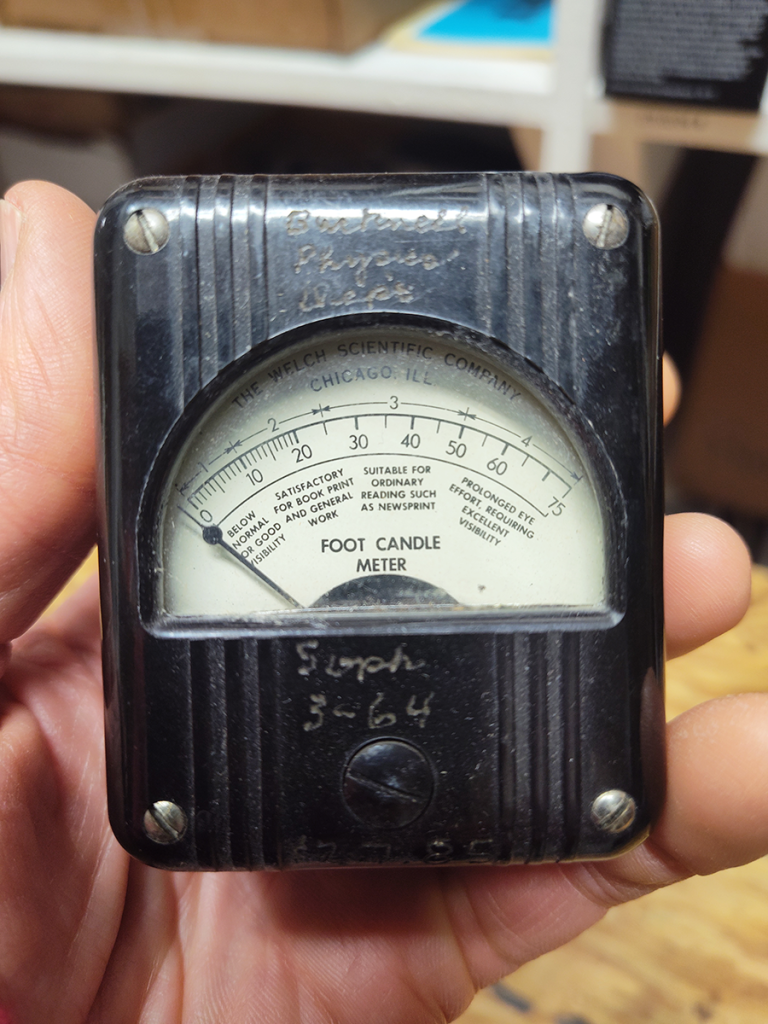
If it still works, it stays in service. There’s always a bit of “what’s this?” and “what’s it do?” and “how do I make it do what it does?” when stumbling across old equipment, but that’s what we have physicists for.
Discoveries in the Physics & Astronomy shop | Science, curiosities, and surprises

If it still works, it stays in service. There’s always a bit of “what’s this?” and “what’s it do?” and “how do I make it do what it does?” when stumbling across old equipment, but that’s what we have physicists for.

LEDs can do some excellent things, primarily generating a lot of photons for very little power input, with the opportunity to have a fine degree of control over the details. Optically, though, they need a little help.
Fortunately, for our undergraduate labs in need of an adjustable light source, a spherical glass lens and an adjustable housing collimate them well enough. Which, when you need to build a lab’s worth of these things, makes life in the basement a whole lot simpler.

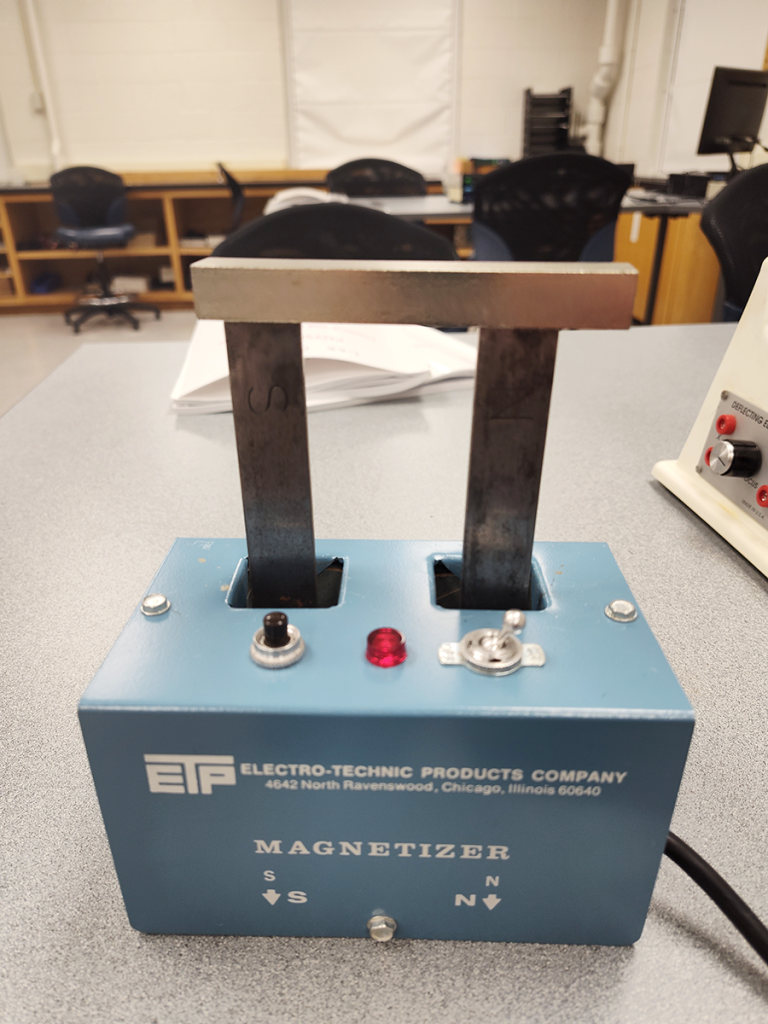
Remember those days? Floppy disks and cassette tapes and VHS and all those different storage media using magnetic materials, which could be corrupted or unwritten with inadvertent exposure to strong magnetic fields.
For fun, see how many modern applications still use a stylized version of the 3.5″ floppy as a “save” icon. (As of scribbling this, Microsoft Excel does.)

Of course there’s a second enormous map, just as inexplicable. Same German cartographers, same 1990s era, same corner of the Observatory.
This one’s the Middle East, or in German, Naher Oster (Near East). We’re sure there’s an interesting story on why the nomenclature’s similar but distinct in different European languages.
We’re not sure why these were set aside here, but at least they’re neat?

We can make guesses – both educated and wild – as to why this enormous map of North Africa was tucked away in the corner of an Observatory classroom. This all-in-German map. From the 1990s.
It’s in good shape, and kinda cool in its own way. Just borderline inexplicable.

If you let an ordinary rubber balloon age long enough, it might just shatter into pieces at the slightest touch.

While exploring a potential site for measurement equipment, it’s important to keep an eye on the local wildlife. After a long time underground, those big red eyes are just taking it all in.
Not pictured: all of the other cicadas all over the place. Because where there’s one, there are bound to be many, many more. Brood XIV, maybe?

All respect to warnings which don’t mince words.
“GLUE WILL BURN FLESH”
Noted.

Oh, right. Some days, you might forget that we share one of our storage spaces with the Theater & Dance department.

Sometimes you stumble across a delightful artifact. One with an unknown, perhaps unknowable history. Clearly, at one point, it was necessary to hold an object in a particular place, and none of the available clips, clamps, or clasps were up to the task.
A steel rod, an alligator clip, and some electrical tape to the rescue!
What’s fascinating about this isn’t the specifics of the object, but the way that these temporary, stopgap solutions can linger. After enough time and use, they become ordinary and unremarkable. Familiar.
Until, some indefinite period of years later, a fresh set of eyes spots them in an old drawer. Look at what’s in here!