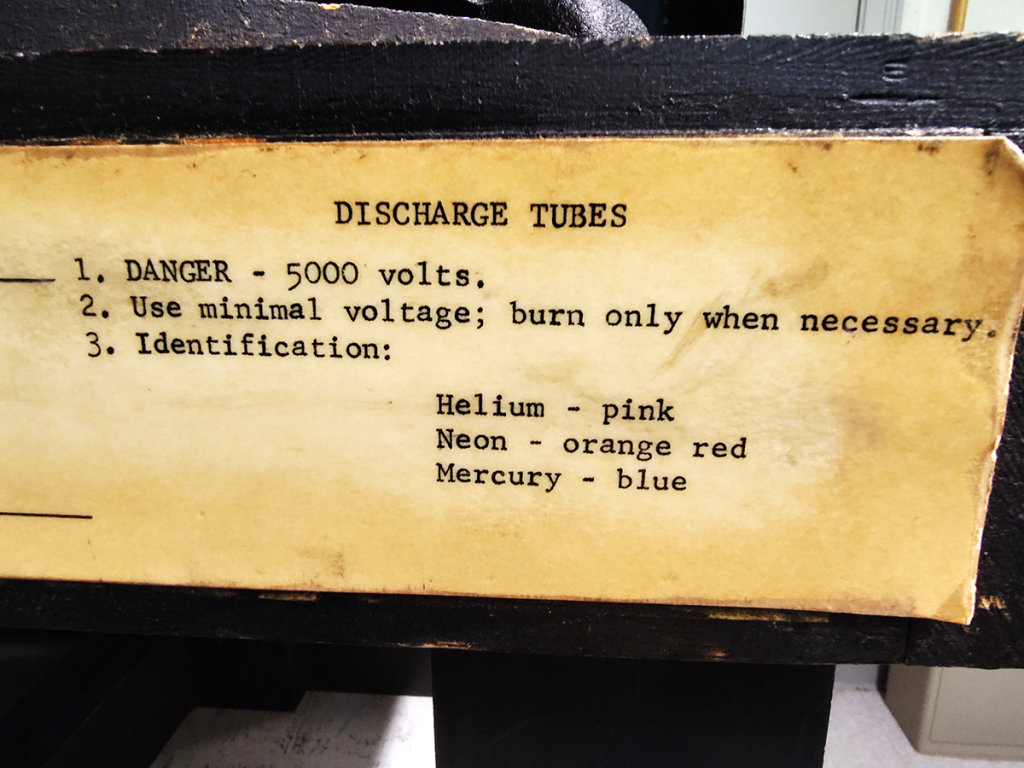
Aside from the general vibe of “this is dangerous!,” this seems an odd sign.
Five-thousand volts, but use the minimum. Stick to a less dangerous danger?
Burn only when necessary? Presumably “necessary” gets defined elsewhere?
And, ooh, that blue mercury vapor. You’d think a UV warning could be number 4 on there, given its still-useful ability to sterilize hard-to-reach places. For your eyes’ sake, don’t look too long.
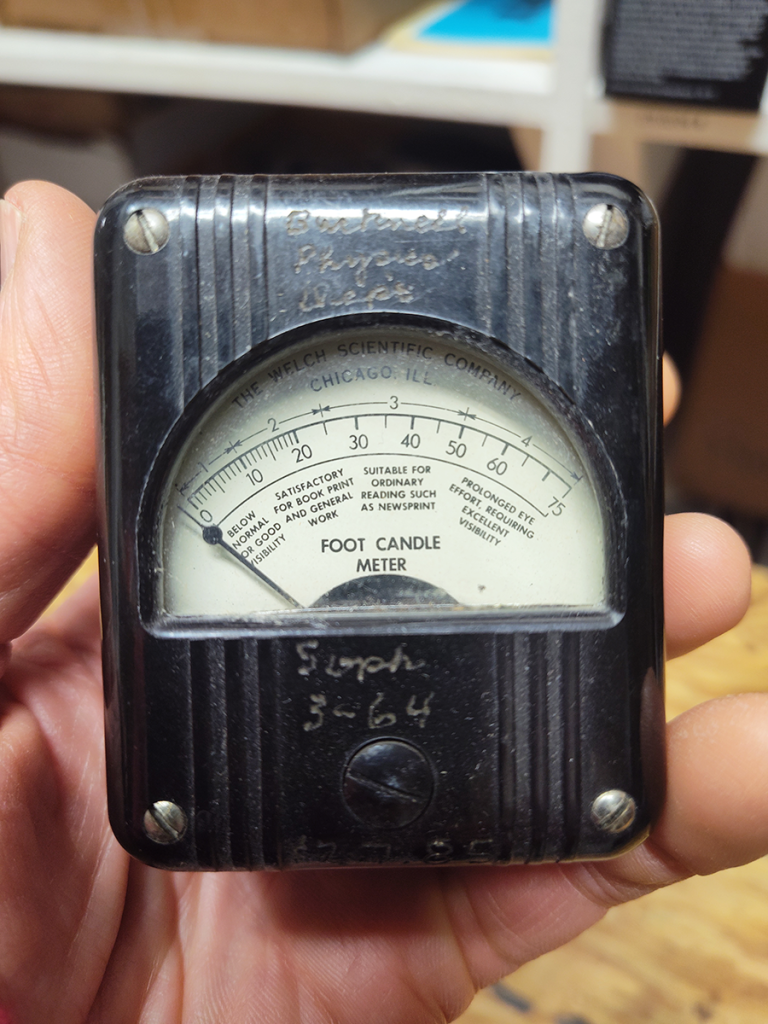
Yes, a footcandle is an actual unit of measurement.
Sometimes you stumble across little gems, squirreled away in the back closets, like these illuminance meters, acquired in March of 1964. Sadly, no cost etched into the side. Eventually, these were replaced with more modern versions, before being phased out of labs entirely.
We can guess how they were used – being next to a box of slide frames with a rainbow of color filters – and assume they’re not making a comeback. But check out all of that tiny, mid-century text crammed on there!
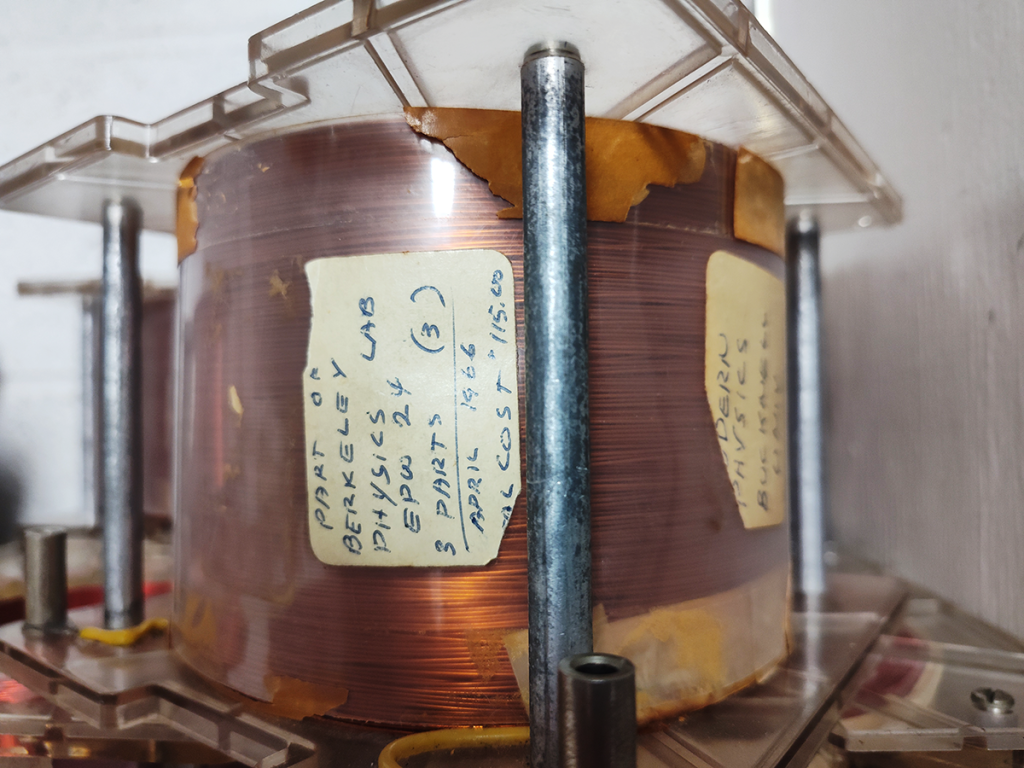
Large and heavy coils of enamel-clad copper wire, which allow for tight, dense windings, are useful for demonstrating induced currents caused by a changing magnetic field. Students can spin magnets on a rubber band to produce enough electrical energy to light an LED. Not much, sure, but it’s still borderline magical.
Note that these hold up for a long time. Acquired in April of 1966 – just shy of six decades ago – and it’s still in regular use.
That $115.00 price marked on there? $1,171.89 in today’s dollars. Do you think we’ve recouped our investment?
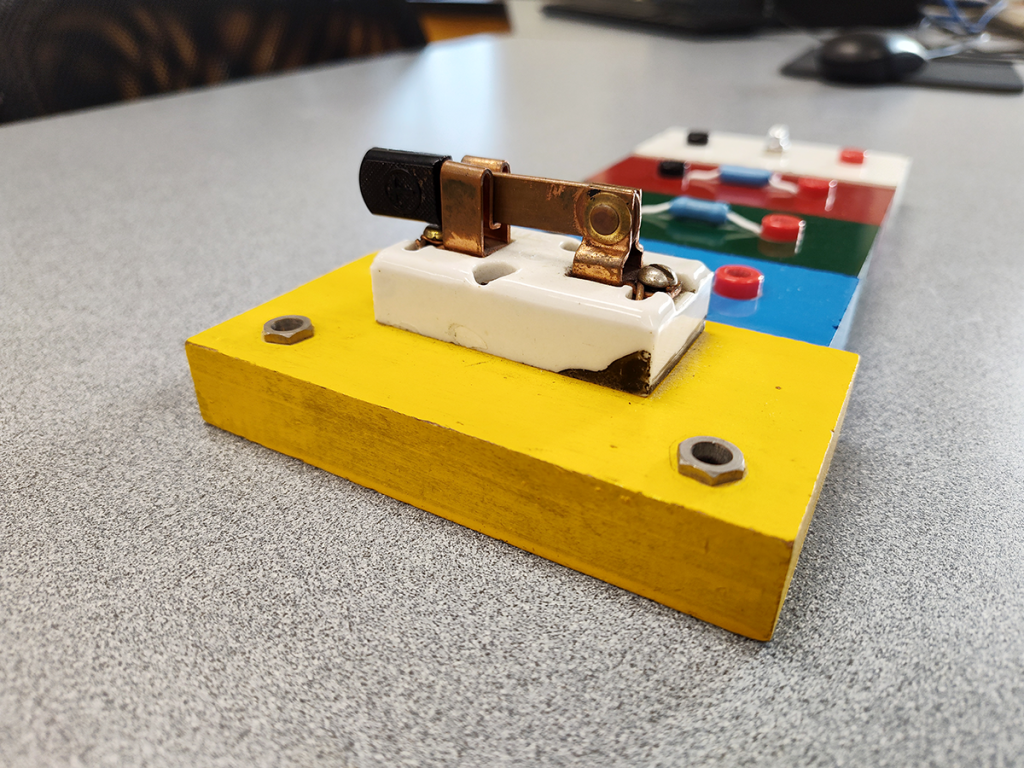
When learning about the laws of Ohm and Kirchhoff, it helps to have some hands-on experimentation, wiring together batteries and resistors and tiny little incandescent bulbs. Try it, see what happens, measure your voltage and current. Simple enough, yet more satisfying and memorable than just drawing squiggles on paper.
Plus, you get to open and close the switch like a tiny Frederick Frankenstein! Just try to resist the urge to shout out “My Creation Lives!” too loudly.
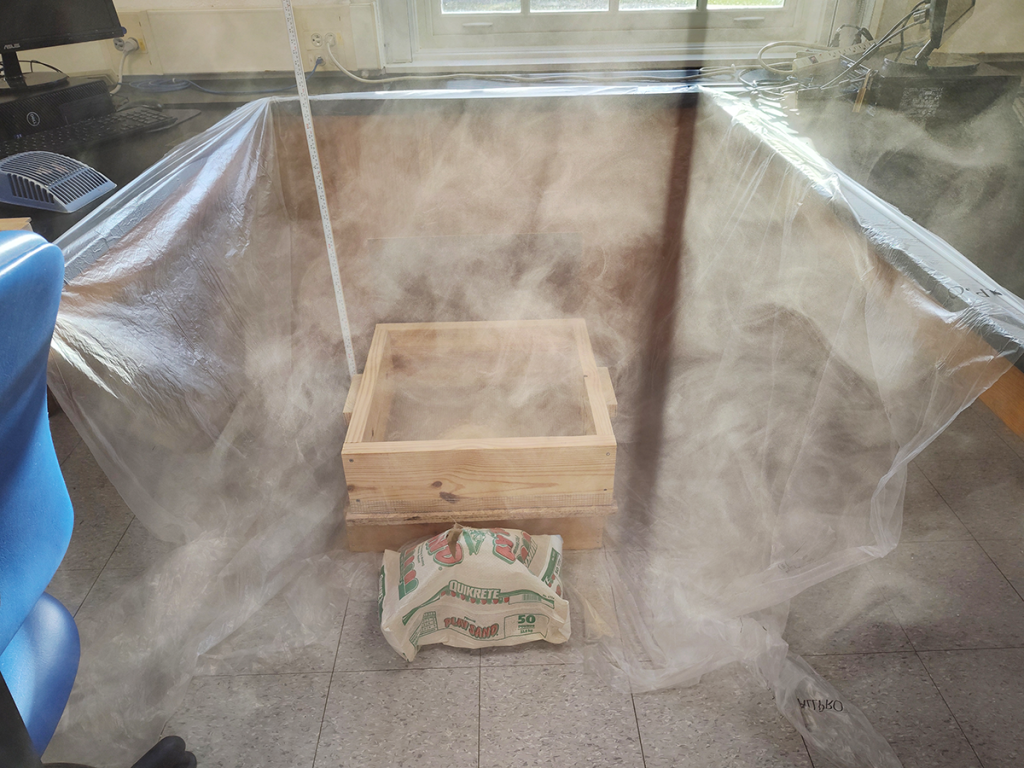
Ah, the annual astronomy craters lab. Lots of sand, lots of color powder, a handful of marbles and ball bearings and slingshots. And a mess that’s really something to behold.
It’s definitely a “don’t wear your good clothes” sort of lab session.