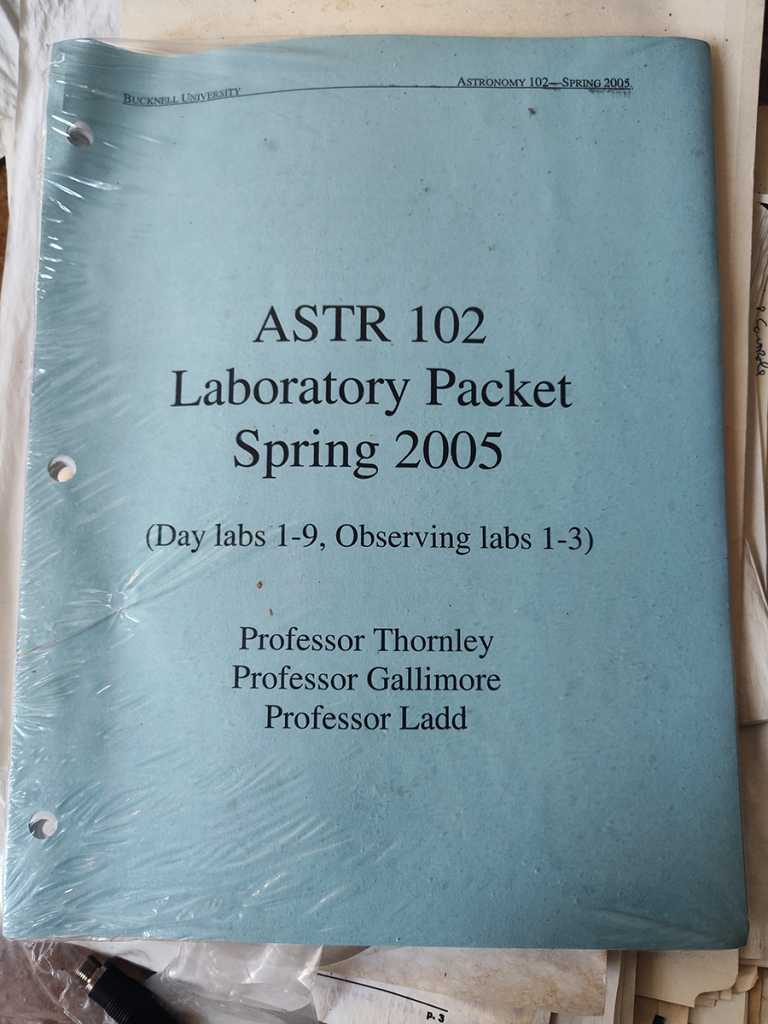
Just over two decades ago, this was our introductory Astronomy lab packet. Things have evolved since then, but the bones are still there!
Three distinct nighttime observing labs, though? Jeez. Night sky conditions really were better back then.
Discoveries in the Physics & Astronomy shop | Science, curiosities, and surprises
Just over two decades ago, this was our introductory Astronomy lab packet. Things have evolved since then, but the bones are still there!
Three distinct nighttime observing labs, though? Jeez. Night sky conditions really were better back then.
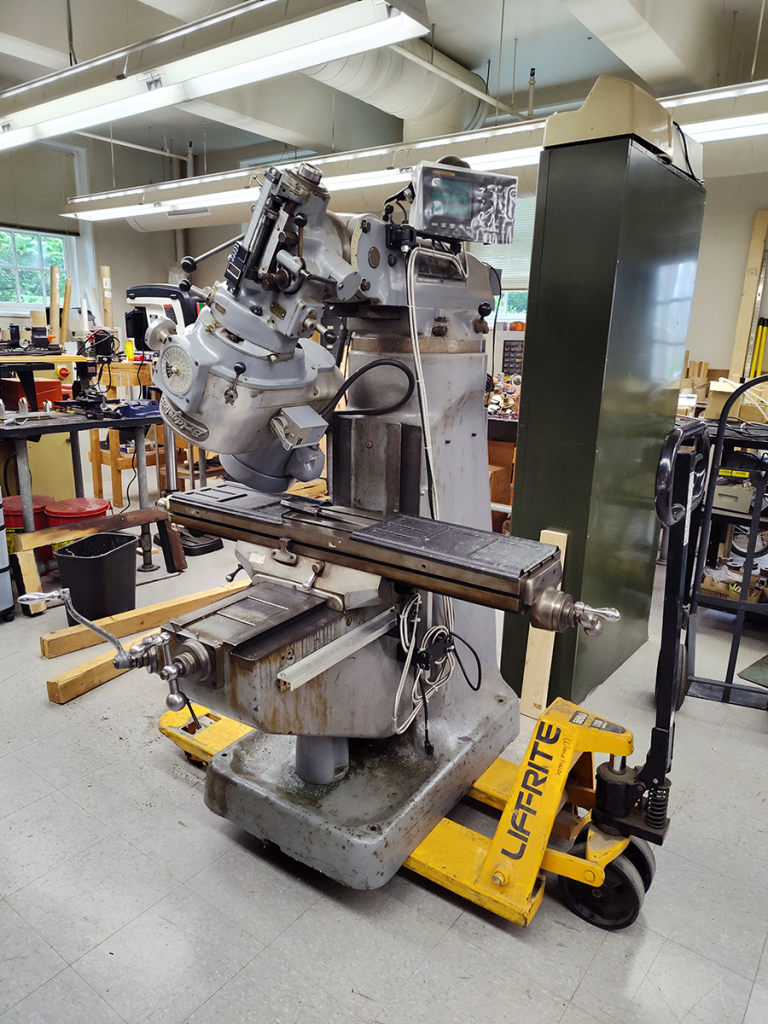
There it goes, our old 1968 Bridgeport. Cast iron and steel, in need of a little refurbishment, and off to a new home across campus. The replacement’s on its way.
That we got the old one out the door is a small miracle by itself. Installing the new milling machine? There’s a budget to pay someone else to do that.
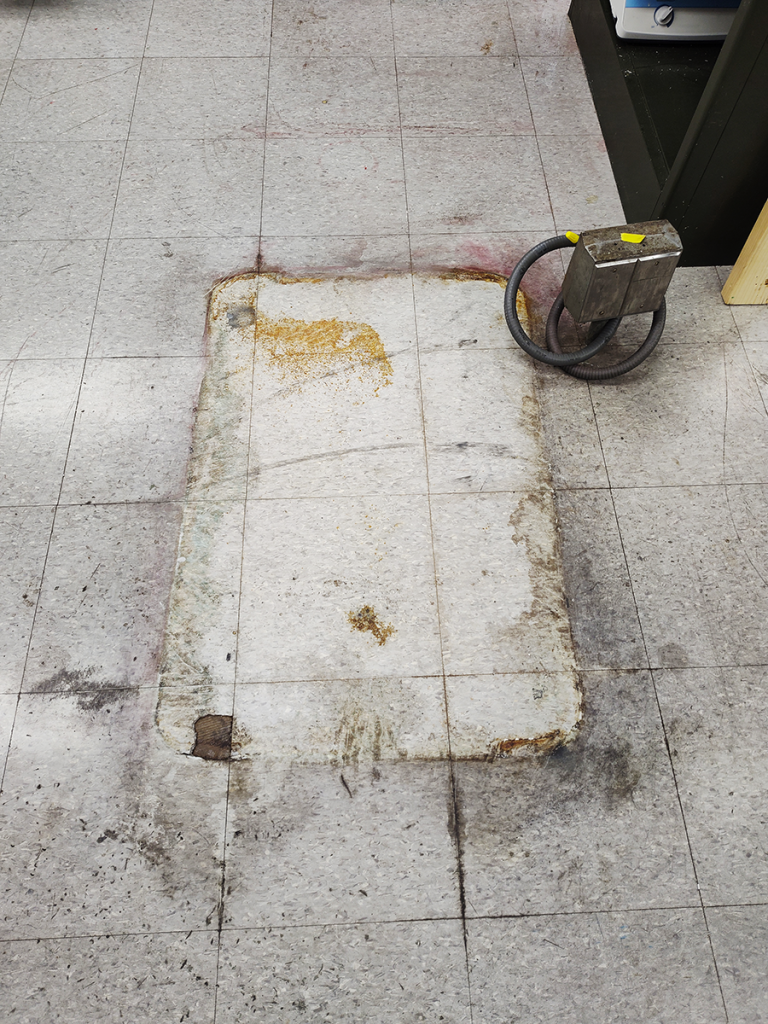
All it’s missing is the chalk outline and little tents with numbers.
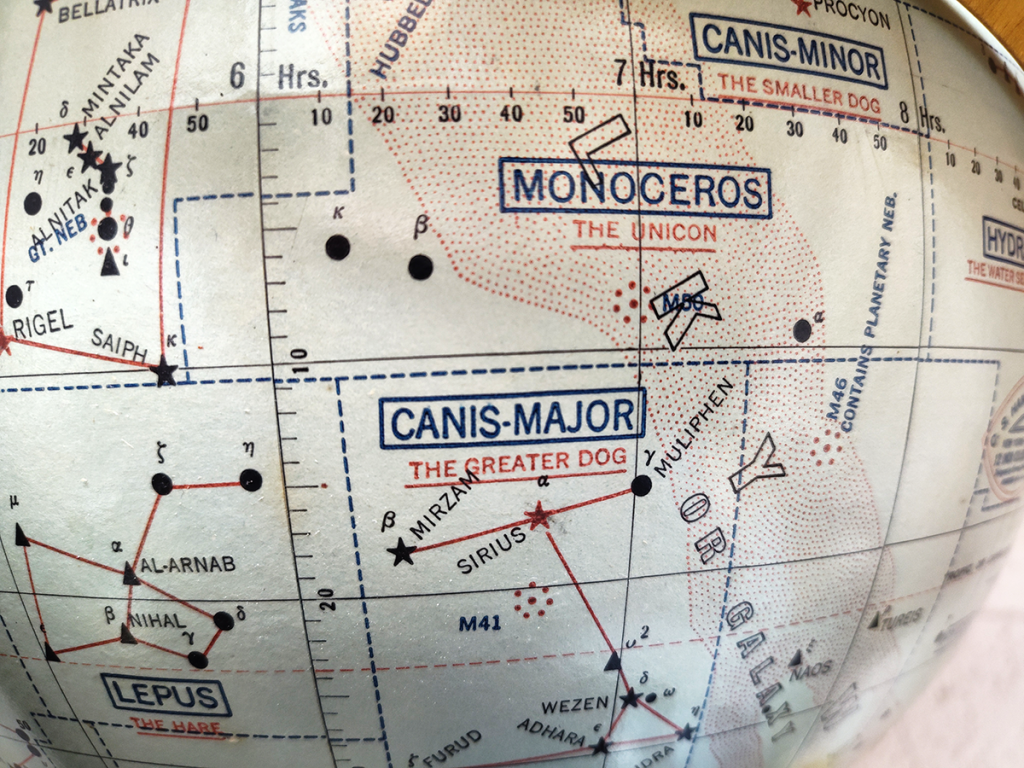
Behold, Canis Major, the Greater Dog! He’s such a good boy!
Sirius-ly.
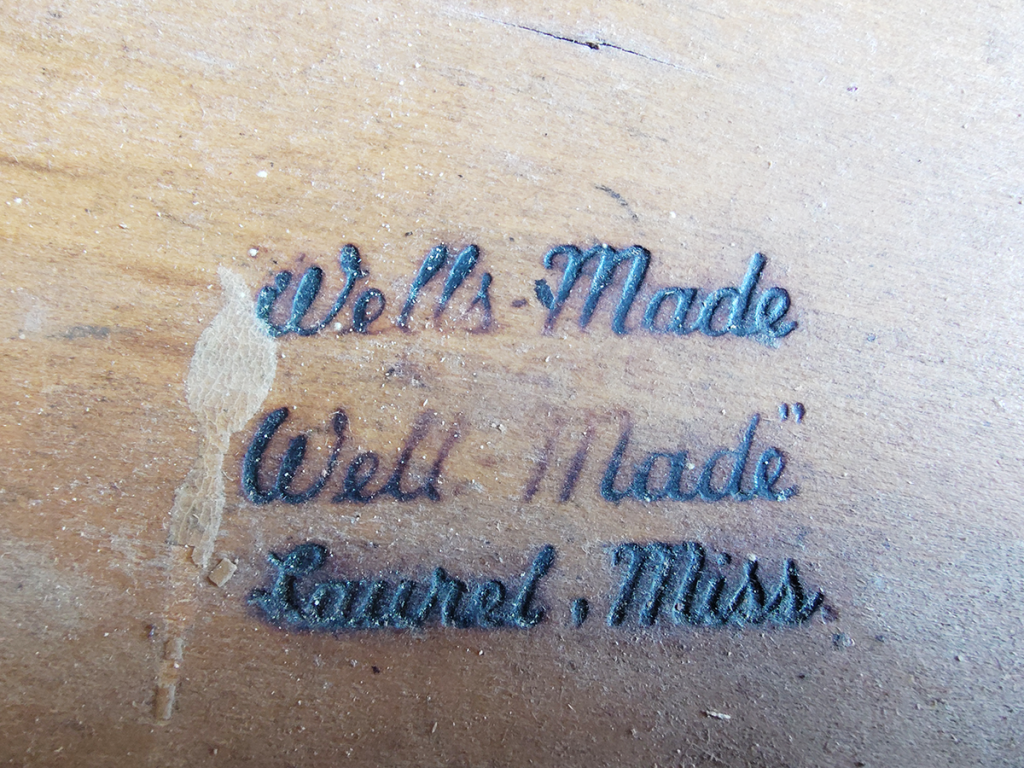
Discovered inside an old wooden desk, burnt into the solid-wood drawer. No complaints about the quality of construction, to be honest. But how long has it been since furniture makers burnt in their brand with red-hot iron?
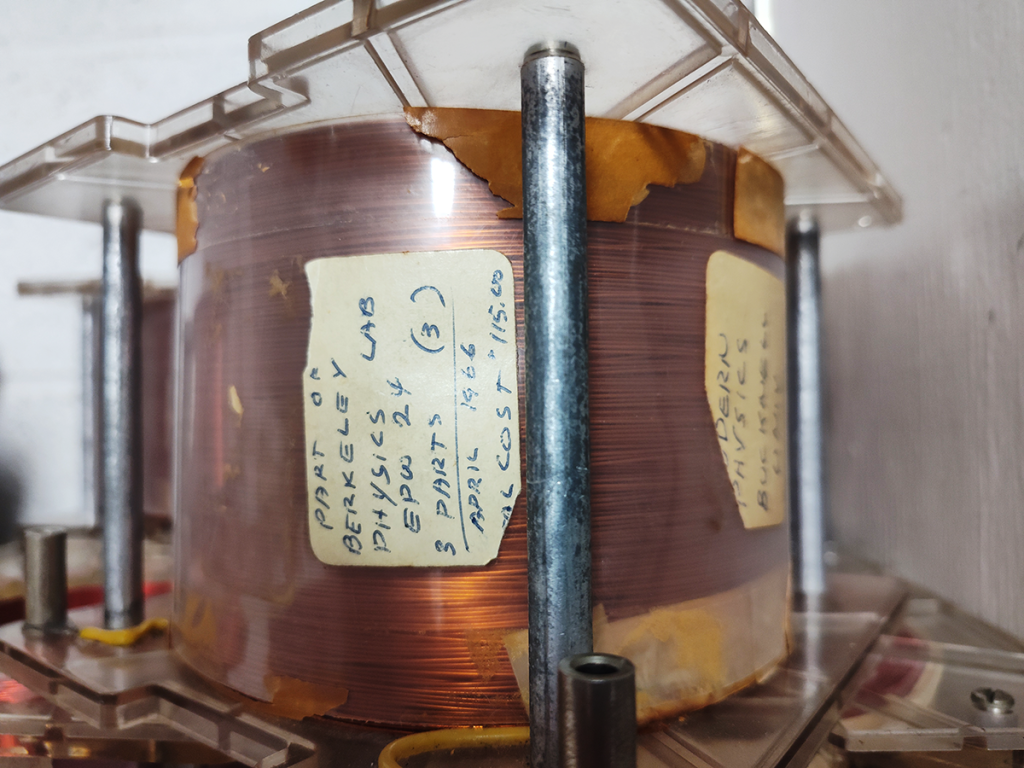
Large and heavy coils of enamel-clad copper wire, which allow for tight, dense windings, are useful for demonstrating induced currents caused by a changing magnetic field. Students can spin magnets on a rubber band to produce enough electrical energy to light an LED. Not much, sure, but it’s still borderline magical.
Note that these hold up for a long time. Acquired in April of 1966 – just shy of six decades ago – and it’s still in regular use.
That $115.00 price marked on there? $1,171.89 in today’s dollars. Do you think we’ve recouped our investment?
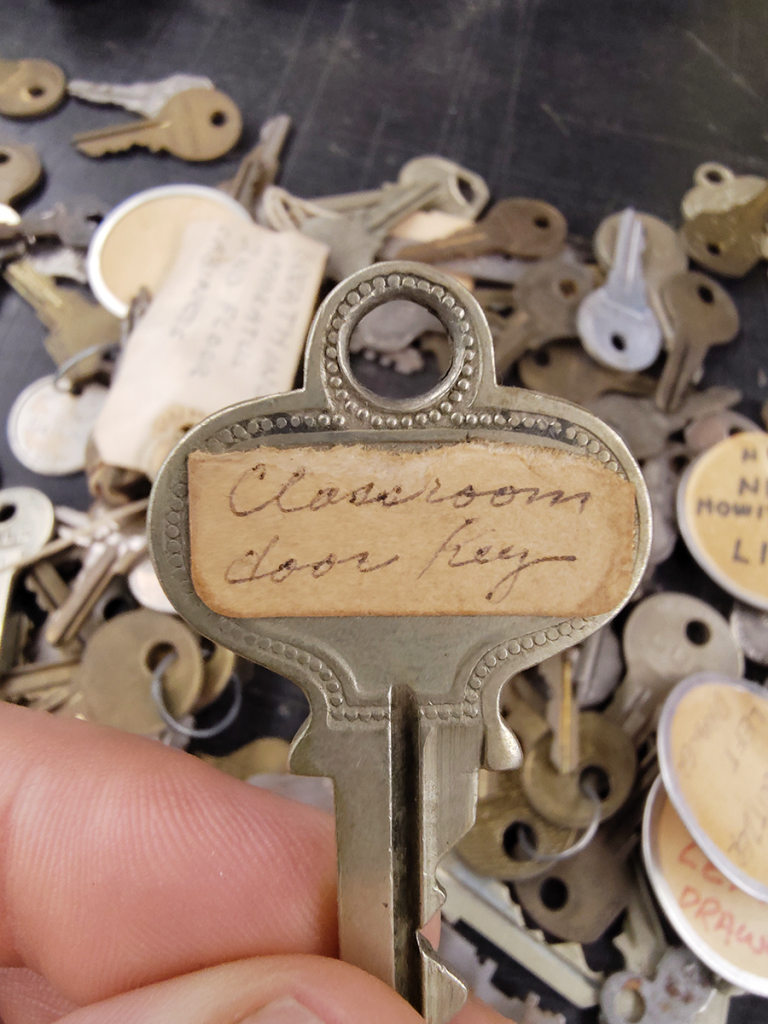
“Classroom door key.” Matter-of-fact, handwritten on a torn adhesive label. No need for building or specific room number identification. (The other side has no markings.)
Maybe there was only one classroom at the time? Maybe they were all keyed identically? Maybe the original bearer was only concerned with one specific classroom, one which needed no elaboration? Who knows?
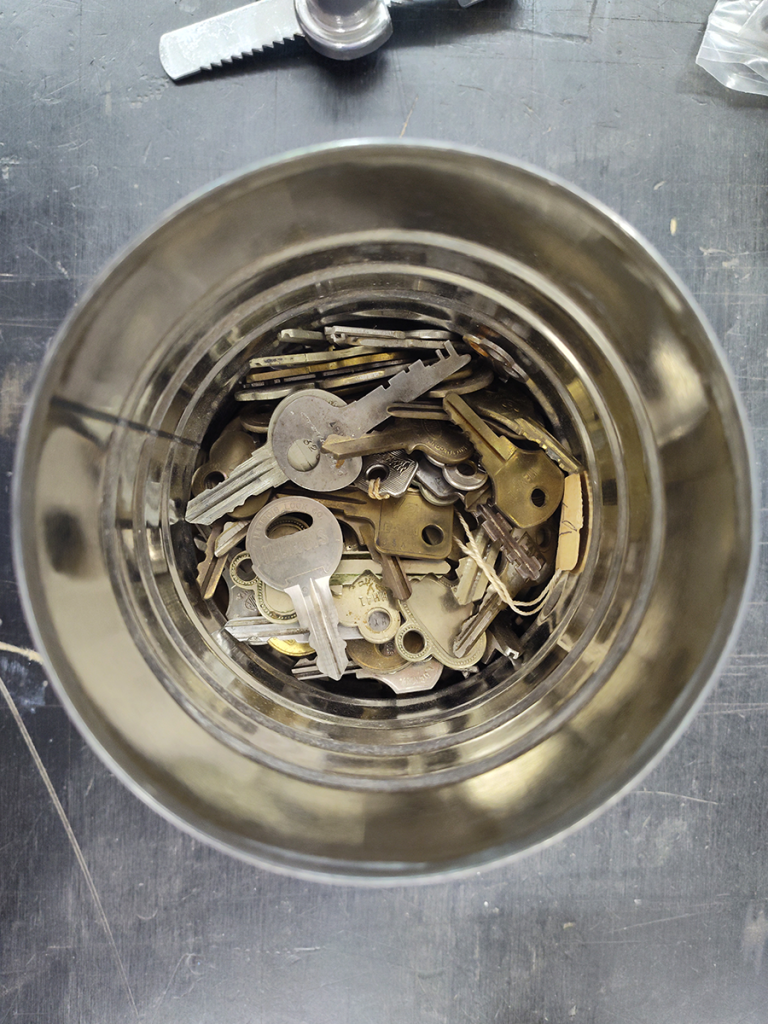
Another coffee can, this one half-filled with old keys, most unlabeled, almost certainly all of them to locks long gone. Not like “bucket of keys” is a prime organizational strategy, so one supposes these can be used for some exciting new arts and crafts project?
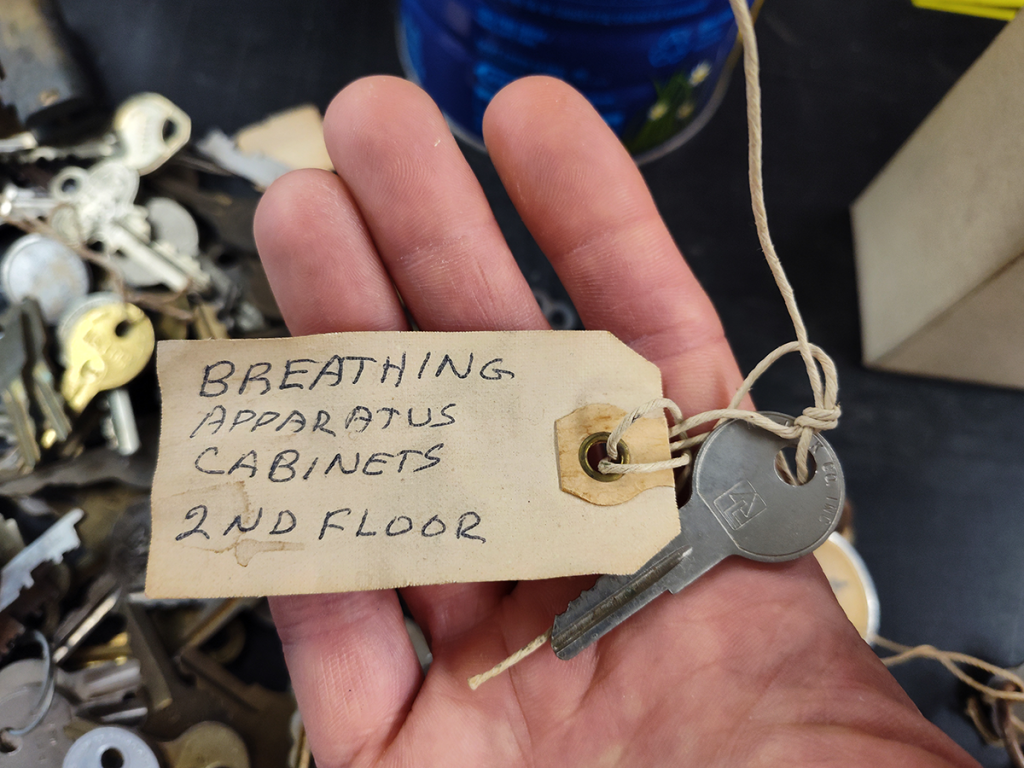
Apparently, at some indeterminate point in time, the second floor held cabinets with a breathing apparatus inside. Respirators? SCBA systems like firefighters use? SCUBA systems like divers use? Pretty confident that those’re long gone.
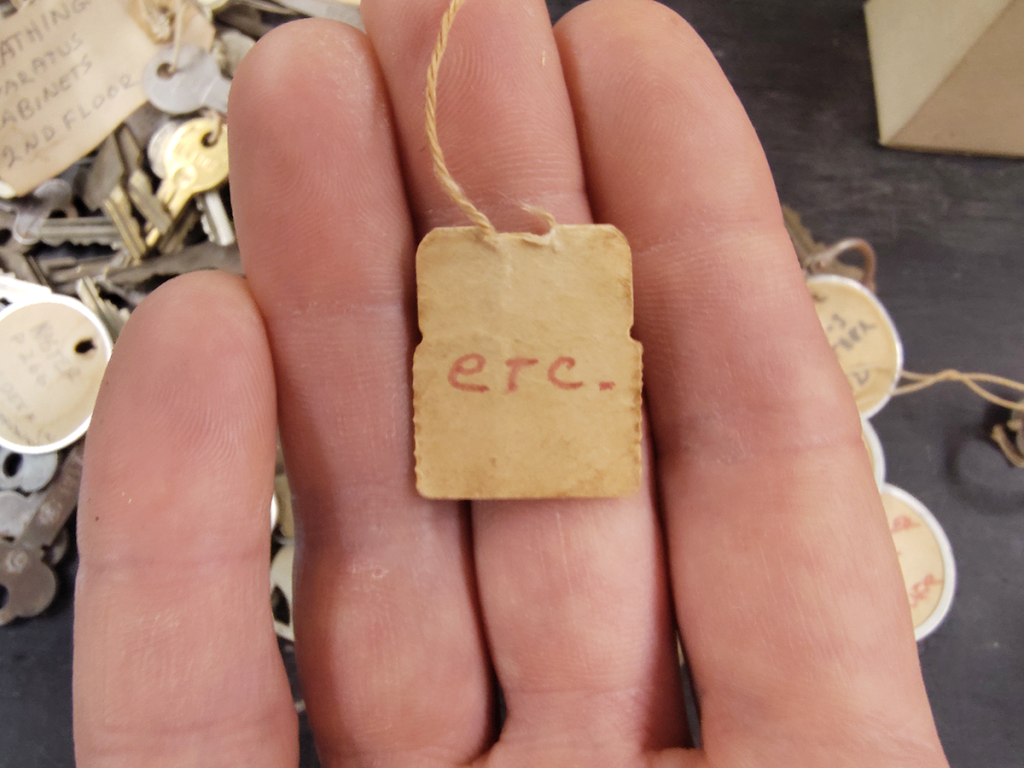
This one has become disconnected from its key, so your guess is as good as ours. What useful information could that possibly offer? Like, even if we knew which key it identified?
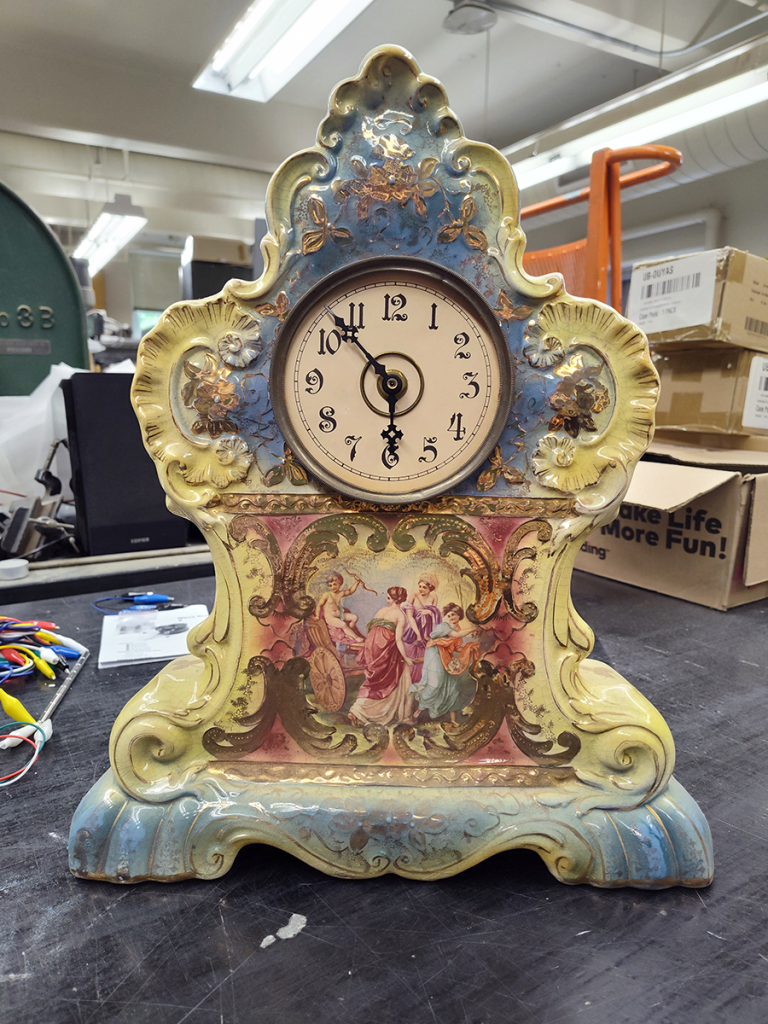
Sometimes you find oddities whose initial and continued existence boggles the mind. This clock was gathering dust atop the bookcases in the student lounge, battery-free and long-forgotten.
Where did it come from? What life did it live before it came to Olin? Who thought enough of it to acquire, but not enough to take with them?
What should we do with it now?
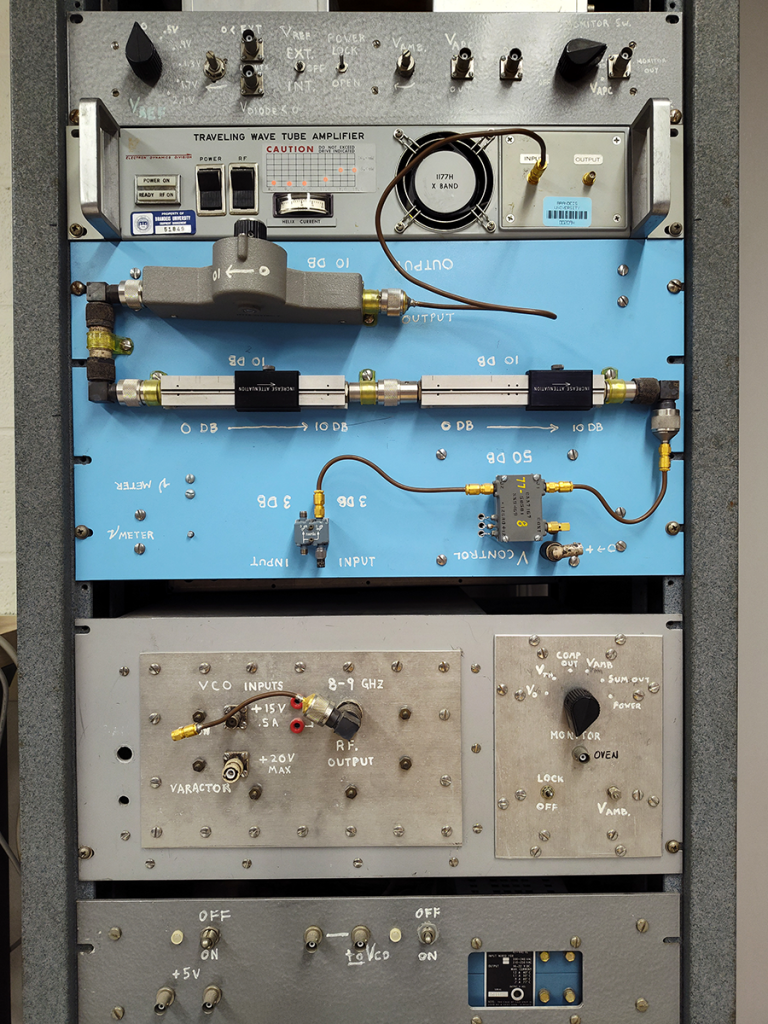
If it still works, it stays in service. There’s always a bit of “what’s this?” and “what’s it do?” and “how do I make it do what it does?” when stumbling across old equipment, but that’s what we have physicists for.
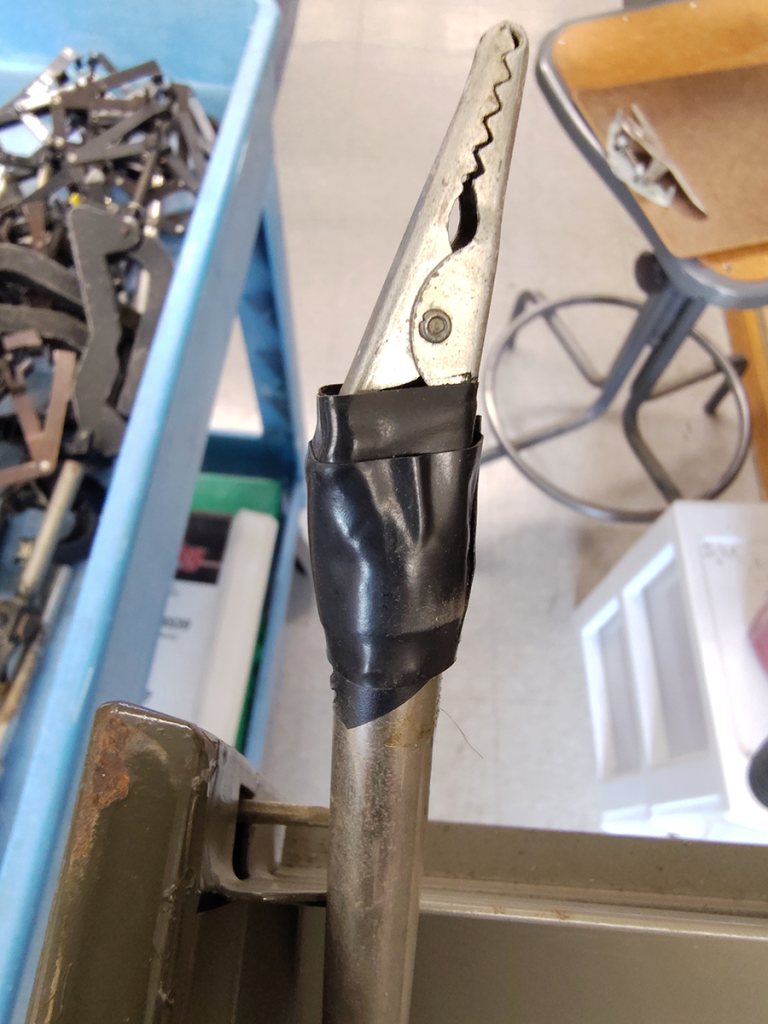
Sometimes you stumble across a delightful artifact. One with an unknown, perhaps unknowable history. Clearly, at one point, it was necessary to hold an object in a particular place, and none of the available clips, clamps, or clasps were up to the task.
A steel rod, an alligator clip, and some electrical tape to the rescue!
What’s fascinating about this isn’t the specifics of the object, but the way that these temporary, stopgap solutions can linger. After enough time and use, they become ordinary and unremarkable. Familiar.
Until, some indefinite period of years later, a fresh set of eyes spots them in an old drawer. Look at what’s in here!